Showing posts with label fiction. Show all posts

Thursday, August 25, 2016

A Review: Miss Peregrine's Home for Peculiar Children

Unless you've been living under a rock, you've likely seen the visually enchanting trailers for this book turned movie, directed by Tim Burton. The premise of the book is based on the author piecing together a story with the help of a collection of eerie vintage photos that might have been double or triple exposed... or are in fact real images of peculiar children with peculiar abilities.

The book is geared towards a youth audience, with a (logically) teenage protagonist. Jake's life is a sort of perpetual limbo from his birth with all the wealth he'd ever need and no need to do anything but eventually "take over the family business": he's a trust fund baby. But he's bored. He sees his parents and their dull pointless lives and is unhappy and helpless to accept his. That is, until something happened to change everything. I guess everyone can relate to the mundanity of daily life with going to work, interacting with your family and friends in a very normal fashion all the while without real direction, purpose or any idea about what to do with yourself. Adults generally are busy adulting or raising their kids so I don't think they get lost in the same thoughts of boredom as Jake.

The thing is, as an adult who's not currently doing any adulting, I should naturally fall right into the book's story and be excited. I read with determined vigour searching for the hook in the book that would pull me in and sell me on getting the other two books of the series. I think that the years of adulting have left me with little imagination or interest to go off on a fictional journey. I think it's a good read for the target audience because I do believe that there are plenty of kids these days who lead rather dull existences and want to discover that they're special and go on an exciting and risky adventure. I can't speak for the movie as I didn't watch it but as with all movies from books, better to read the book before watching the movie just because the original is always better!


Without giving more of it away, I would say the book is worthy to be picked up by a youth audience and would be a good read for them without getting into subjects that are way over their heads (like adulting). It's a good coming of age story about a boy that many could relate to and see a part of themselves in him and go on an exciting journey to seek out their place in this world.

Monday, July 21, 2014

A Review: the Other Boleyn Girl

This book by Phillipa Gregory is probably her most notable volume about the Royalty of Britain. I haven't read any of her other works so I have little to compare to in terms of similar author style. However, following my trip to England in 2011, I developed an intense obsession interest about King Henry VIII and his six wives--particularly Queen Catherine of Aragon and Anne Boleyn. Even though I know the outcome of the story, it didn't stop me from reading and watching. I picked up the Showtime series "The Tudors" since it was originally the one I wanted to watch and I also found the 2008 on-screen movie for "The Other Boleyn Girl". As I mentioned, Henry had 6 wives in total but the most notable coupling was with Anne Boleyn because it changed the the face of marriage, the English monarchy and religion.

It is no secret that King Henry VIII's objective was to have a son in order to have a legitimate Tudor king rule England. Catherine of Aragon was unable to provide him a living male heir, though, I believe she had taken to child six times during their time together; only Princess Mary survived to rule. As with any monarchy, they are surrounded by ambitious courtiers who work hard at gaining favour with the king. Anne Boleyn manages to not only seduce the king, but is Henry's cause for breaking with the Roman Catholic Church and becoming the head of the English church. (They argued that the marriage with Queen Catherine was invalid because she married his brother Arthur first.) But, readers are shown that this game is a dangerous one to play and one could be in the king's favour one moment and then out, the next. Even faster than the relationship was established, it came crashing down and Anne was tried and convicted of adultery, treason and sentenced to death by beheading.

There have been many books written about this ruling monarch and Anne Boleyn. The generally accepted events and details of history are reflected throughout the book as the solid skeleton and the rest of the story is brought to life through Gregory's interpretation and imagination. It's an interesting take to have a secondary character in history take on the narrative of the story. Instead of having the story told by Anne, we see events unfold through the eyes of Anne's sister, Mary. To enhance the sequence of events, each chapter is a specific season and thus range from a few pages in length to a dozen or more.

Since the book is categorized as historical fiction, one can assume the actual thoughts and specific actions that took place; such as the miscarriages of Lady Anne. The horrid dark and criminal actions that the Bolyen children did in the book are all speculation about what might have happened. I'm not a historian and not that well versed in the exact details of the history here but I do know the basics about what happened so the rest, I take as fiction. The two most impressing features that were made very clear to me was the inequality of women and men during the time, and the lack of medical and scientific/biological understanding. Men owned everything and the only way a woman could have a good life was through the man that she was betrothed to, by her family. Women and girls were just pawns in their family's ambition to climb that ladder towards fame, fortune and wealth and if they didn't like that idea, "there would always be another girl ready to take the place of the waning one". Fathers and uncles essentially pimped out their daughters and nieces to advance their own careers and family ambition. The other thing was the extreme lack of medical and biological/scientific understanding. It was crazy for me to read that pregnant women were considered so fragile that their partners (in particular, the king) would take another woman to his bed during her pregnancy and then the last few months she's go into a sort of 'hiding' where they were restricted bed rest and staying indoors in the dark.

The 2008 movie made was a really poor translation of the book and if I could get back that ~90 minutes or so, I'd gladly take it back. The Showtime series on the other hand is very well done despite being adjusted and manipulated for a television audience. The acting by Jonathan Rhys Myers is outstanding and worth watching. He isn't your typical historical Henry VIII (i.e. fat in his later years) but the intensity of character is amazing to witness. The costume and sets are also worth the visual opulence and breath-taking scenes.

When I asked a friend who had read a few of Gregory's books, she mentioned to me that the fiction part tends to be formulaic, predictable and lacking real substance. But, the history and culture that the reader could gain is well worth the compensation. And for those equestrian readers, there were no motorized vehicles so talking about their 'hunters' and the time it took to prepare to travel (by horse), the hunting on horseback... it was nice to imagine what that might have been like ;)

Tuesday, May 6, 2014

A Review: Catching Fire

I am pretty sure I've been reading Njal's Saga for months now. So, I decided to take a break and read one of the books on my list that I knew I'd finish quickly: Suzanne Collins' Catching Fire. This is the second installment to the trilogy of the Hunger Games and I got through the first one so fast that I figured it would be the same here. I was not wrong.

Written in (logically) the same style, the narration was done in first person perspective in the present; Katniss is not telling a story but rather, experiencing the events. Hence, we are experiencing them simultaneously. I said before, that this is perhaps the most effective way to bring in a reader by getting us to feel and think like Katniss. This the the type of story though, that can be difficult to capture on screen.

I watched the movie the minute I finished the book and that was the thing... I noticed that if I had not read the book, I probably would have been somewhat confused and not gotten the amount of insight into Katniss' motives for doing things. However, the movie was done reasonably well in terms of the cinematography, costumes, sets and casting; it also provided a visual basis for me when I read. But, I felt that the characters were one-dimensional, after having read the book.

The book does a much better job at pacing the story along with a build-up of what's happened since Katniss and Peeta won the games. You experience the lives they live/d and get an appreciation for life of the Seam and even the Victory Tour. I think it was nearly half the book that was spent on life in the Seam and the thoughts and events between the 74th and 75th Hunger Games. I liked this because I got way more in-depth with what's happened and how much has changed. The reader also gets a much better appreciation for the time that has passed. There is much more build up of the characters and the turn of events. Unfortunately, the movie doesn't portray this well and I felt like we were quickly pushed into the games. There was a lot that was missing from the book, that the movie just either skimmed over, or all together skipped. It was kind of disappointing because I felt that the things they did skip really added to the plot and characters.

Because they skipped so much, I felt that they didn't have the opportunity to really develop Peeta's character. I'd say of all the characters so far, he has developed the most and you really see more depth of his character and motives in the book, than you do on-screen. On-screen, it's as if they just put a lot of Gale shots in there to remind us that he's the more quintessential manly man that every girl pines over, in the Seam. Then, to pull us back on #teampeeta, they alter the story about how Gale gets those lashings in the square. They force #teampeeta on you instead of letting his actions do the talking. I love Peeta not because Josh Hutcherson is a cutie but because when I read about his character in the book, I am so moved with who he is becoming.

I can't wait to read the next one but they've split the last book into TWO movies!! One comes out this fall and then the second one finishes in the fall of 2015. Since I like to read the book just before seeing the movie, this is going to be a long time to wait...!

Saturday, November 9, 2013

Two Reviews: The Hunger Games

I'm so far down the rabbit hole on this one I'm not sure I can really get into anything else until I'm "allowed" to get into the second part of this trilogy. Going from deciding this is a lame story for kids, to thinking about the characters and their motives while I'm raking leaves... seriously. So far down. But, despite this, I'm moving right along this month. I picked up the Hunger Games by Suzanne Collins more out of curiosity than anything else. It seems like a lot of what I've been reading lately has not been planned! But, that's part of the fun.

The Hunger Games was written several years back but has become a huge hit and was made into a movie. I probably don't need to hype it up much more than that since Jennifer Lawrence has become a household name. This series was written for youth, but, it's surprisingly gruesome and violent (granted, that's up to your imagination) and gained a wide following. I finished reading the book in a work week. As usual, this fictional story took time to pull me in; it didn't take long though. Collins uses a first person present perspective through the eyes of the book's protagonist, Katniss Everdeen. Because of this style, she writes simply and to the point; we are in the mind of Katniss experiencing each moment as she is. This is not a story telling but rather, a live account of a character's life. We're brought into the story through the eyes and thoughts of Katniss.

The story is set in a dystopian future where the people live in Panem--the remnants of North America. The rich and advanced live in the Capitol, enslaving the surrounding districts by exploiting them for specific purposes. This keeps each of the districts in some sort of oppressed state where they live to provide and work for the citizens of the Capitol. We are provided little background about what happened for the world to arrive at this state of opposing wealth and extreme poverty.

I'm not sure if Collins had the intention to talk about specific themes in the book but my take of the primary theme is that it's a satire of reality television. The games themselves are staged and controlled in a way which the gamemakers analyze and create situations to improve ratings in the Capitol. Though all the districts are required to watch, not for entertainment but because they are forced to, in part of the punishment of their Treaty of Treason, the people of the Capitol watch purely for entertainment. They have no connection to the tributes whereas those in the districts are hoping that their tribute won't die. It's a matter of survival for those of the district and for fun, in the Capitol. The lives of those in the districts is hard and real whereas those living in the Capitol are seemingly frivolous and fake. Even in one part of the book, Katniss reflects about the absurd values that those in the Capitol have about appearance.

I couldn't read the book and not watch the movie--especially since it was released on Netflix. The movie was pretty true to the story of the book but as expected, could not capture the first person present perspective and as someone who read the book before watching the movie (never ever read the book AFTER watching the movie!), I found it shallow and lacking depth of character. In addition to this, the camera angles and styles the director chose was making me sick! I suspect it was done to capture the first person perspective of the action but I was eating dinner watching it and had to sit further away during chase scenes so I could keep my meal down.

Nevertheless, I am excited about the second installment of the trilogy and am anticipating my literary palette cleanser before falling back down the rabbit hole ;)

Saturday, November 2, 2013

A Review: The 100-Year-Old Man Who Climbed Out the Window and Disappeared

This book was not originally on my list and I haven't heard of it either. It came as a recommendation from my former manager as she said it is "light hearded, whimsical and funny". The only other information available to me was the back cover of the book that read "A reluctant centenarian with a life much like Forrest Gump's (if Gump were an explosives expert with a fondness for vodka) decides it not too late to start over...".

The author Jonas Jonasson is a Swede with a twisted and creative sense of humour. The plot he doctors up is twisted and ridiculous all while inserting itself in actual world history very nicely. This isn't a novel that has an overarching theme throughout the book, imbedded in the characters and plot; it's simply a book that requires some knowledge of historical events, an imagination and a sense of humour. Our story is centered around the main character Allan Karlsson--a centenarian who's as alert as you or I but bored of his life in the old folk's home. So, he decides to leave. He doesn't have a plan or a specific desire to go anywhere. But, when in his life has he ever?

As the reader follows Allan's journey of a series of unfortunate events, for others; we are also taken back to the days when he dined with Mao and Truman. For someone who is well versed in basic modern world history, this is either a sheer delight with the unusual story that unfolds, or is a blasphemous piece of prose that doesn't take history seriously. I think it's fun to see how Jonasson takes some liberties with what might have actually transpired between these historical figures and Allan Karlsson while maintaining the actual historical outcome.

The story itself doesn't have any specific purpose other than to entertain. I'd say if you're looking for something of a light and fun read with no real objective or outcome, this is one of those books. It's amusing and will, at times, make you laugh out loud or stare in disbelief at the absurdity of the events unfolding before you.

Saturday, August 31, 2013

A Review: Austenland

Let me start off by saying, wow. What a whirlwind read: I picked up Austenland because I have been avoiding Blindness for weeks; I started it and just couldn't get fixated enough to read it on my own. So, as Amb did too, I grabbed Austenland and away I went... 2 days ago. I finished reading this in 2 day, folks! I figured this would be one of those smutty "chick lit romances" that throws in this poor woe-is-me heroine who hasn't the foggiest idea of what to do with herself in terms of her love life and readers read as she awkwardly struggles to grow and mature as a character and then coincidentally finds love with a wonderful Darcy-esque man. *swoon*

I generally shun and abhor chick flicks/lit romances. Yuck. But, as Amb promised, I fell right into the rabbit hole on this one. I didn't have high hopes for the literary quality of the prose and I suppose that was the weakest point for me... the conversation style writing. It felt lazy and lacking a solid grasp of quality writing. However, I'm no writer and similar to my perspective on wine, if you like it, then that's good enough.

The story presents us our heroine, Jane Hayes. Similar to the target reader demographic, she is in her 30s and probably read Jane Austen's Pride & Prejudice and then was introduced to the impeccable BBC rendition of the same story, in 1995; and like many of Austen's modern female readers, fallen in love with Mr. Fitzwilliam Darcy a la Mr. Colin Firth.

(Note: most of you male readers might be completely confused about who this "Mr. Darrrcyyy" is and why us females swoon so much over him. It's ok, you'll never get it; it's a girl thing. We're all in love with Mr. Darcy in some way.)

Oh don't look at me like that, Mr. Darcy!

Jane is down and out on her love life and through a surprise inheritance from a great aunt, finds herself gifted a trip to Pembrooke Park--a fantasy place where the Regency era comes to life and the patrons participate in a staged farce of Regency romance and a life of leisure. The reader follows Jane's story from starting as an awkward, damaged and unsure heroine. She becomes the heroine that we all want her to be: strong, confident and comfortable with who she is and what she wants.

The book makes a great premise for a chick flick movie, and that's exactly what happened--though I have yet to watch the movie that came out earlier this year--but lacks real "meat" as a literary gem and could easily be defined as being a quick and easy read that fits the purpose of being a literary palette cleanser; a break from something heavier. It was fun and thrilling for a P&P fan like myself but it certainly doesn't make you think or react viscerally like The World According to Garp.

If you're looking for a guilty pleasure rush of excitement, girly thrills and a Mr. Darcy fantasy, then this is the perfect read for such a purpose!

Sunday, August 11, 2013

A Review: The World According to Garp

I'm not a heavy fiction reader. In fact, my requirements for a good fiction are generally high and typically, I bore quickly from a fictional read that doesn't catch my attention right away. This was my initial thought about The World According to Garp. I received the book (along with others) from ADW 5 years back when we first met. I suspect it was his way of trying to impress me with his bookworminess; frankly, he had a better chance of wooing me just by donning his glasses. The pile of books sat on my desk until I decided that I need to read more.

I didn't know what to expect from The World According to Garp; the cover gives nothing away and I've never heard of the author, John Irving. Wikipedia summarizes the major themes: death, gender roles, and sexuality. I was skeptical considering the dark subjects it focuses upon and wonder what Mr. Irving would do, to draw his reader in. The Wiki article goes on, to mention that this book is Mr. Irving's best selling title: I decided it was worthy of a chance.

Like much of our media now, there is a lot of sex in The World According to Garp; used as both a noun and a verb. The act of sex, getting it, wanting it, forcing it and the implications or expectations associated with being a specific sex. You could say that Irving sold the book like most marketers do now... with sex; a whole lot of it. But, he doesn't glamorize it like those CK billboards. He makes no attempts to hide anything about the "real deal". The implications of the act of sex as well as what it means to be associated with a specific sex. Irving really messes with the reader's socially conditioned version of sex as both a verb and noun. We're made to feel uncomfortable and out of our natural comfort zone of understanding and what's "normal".

Complimenting this theme of sex, he displays the dualities in virtually everything. Where there is life, there is a moment where death becomes the dominant leader. Or where there is bliss, there is great sorrow and sadness to contrast. The reader is never allowed the opportunity to just be happy for Garp and his family/friends. There is always momentary happiness which is usually followed by a great deal of sadness. But, isn't that the way life sort of is? I found the book's subjects to be very real. Surprisingly, several of the people in my life have read the book and have generally provided a somber or dire perspective on the plot. They have even gone as far as to tell me that the book is "heavy" and "they wouldn't read it again".

Although the story is thoroughly speckled with unusual (and uncomfortable) situations and characters that the average reader might consider to be too crude or even offensive, the reader is always reminded that the world isn't a pretty place and that the theme of sex seems to seep into everything somehow. I find myself not the least bit offended by Garp's actions as I keep a similar realistic (?) view on the world and its people. None of the bizarre cirucmstances seem too far fetched in my mind. So when I finished reading The World According to Garp, I was neither strongly opposed to the subjects he talks about or the characters Irving creates. I felt like Irving represented people with  experiences of disappointment, sadness, disappointment, anger/rage, jealousy, joy, desire, anxiety and happiness. I'd say he got well into the minds of people in general and just decided to make up an interesting story to "put it out there", if you will.

I know Irving has written some other books--not only this one has been adapted to the silver screen--and they all seem to address unconventional themes and issues; so certainly a "heavy read", but one that is real enough to keep us grounded in the reality of the world and its people.

Wednesday, March 7, 2012

Information Download

I always remember the scene in The Matrix, where they literally download "programs" into the people. Keanu Reeves has all these martial arts downloaded into him and then he gets them to upload tonnes of information too. I found this concept fascinating. So, I try to read as much as I can and learn about all sorts of things, places, times and people. It's a slow (and sometimes inefficient) method to obtain information but at this point in time, it's the only one we've got.

While I like to read about real life and history, I have a spot for certain types of fiction.

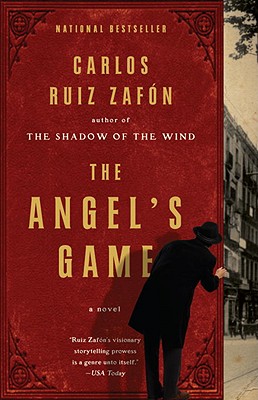
Lately, I've gotten back into the series of books written by Carlos Ruiz Zafon--a Spanish writer who writes gothic/macabre type novels. I've read his first of the series called the Shadow of the Wind and literally could not put it down. Last night, I finished the second installment, The Angel's Game.


Just a great story that is well written and just opens my eyes to a different time, place, people and thoughts.